Dental Implants
Dental implant treatment uses an implant placed in the jawbone to support a crown, bridge or denture when one or more teeth are missing. Suitability is assessed individually.
Dental Implants explained
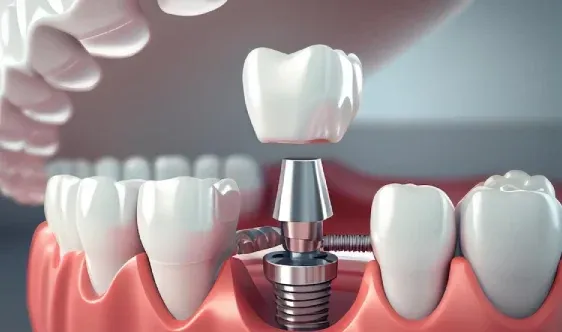
A dental implant is a titanium component placed in the jawbone to replace the support normally provided by a tooth root. After healing, a crown, bridge or denture can be connected to the implant.
Implants may be considered for a single missing tooth, several missing teeth or complete tooth loss. Bone volume, gum health, general health and expectations are evaluated through examination and appropriate imaging.
- 01Examination and imaging
The mouth is examined and bone volume is assessed using a panoramic radiograph or tomography where required.
- 02Digital planning
The proposed implant position is assessed on imaging data. A surgical guide may be considered in suitable cases.
- 03Surgical stage
The implant is placed under local anaesthesia. Additional procedures may be planned if bone support is insufficient.
- 04Healing
Time is allowed for the implant to integrate with the bone. The duration varies according to the clinical situation.
- 05Restoration
After measurements and checks, the planned crown, bridge or denture is connected to the implant.
- 06Reviews
Daily oral care and regular clinical reviews are important for the health of the implant and surrounding tissues.
Questions about Dental Implants
These answers provide general information. A dentist must examine you before giving individual advice.
Is dental implant treatment painful?
Implant placement is normally performed under local anaesthesia. Post-operative discomfort varies between patients; your dentist explains expected symptoms and aftercare before the procedure.
How long does the treatment take?
The total time depends on bone healing, the number and position of implants and whether additional procedures are required. An individual estimate is provided after examination.
Is everyone suitable for an implant?
No. Bone volume, gum health, general health, smoking and certain medicines can affect suitability. These factors must be assessed by a dentist.
How long do implants last?
There is no fixed lifetime that applies to everyone. Oral hygiene, general health, habits, the restoration and regular reviews all influence long-term outcomes.
What if I have no remaining teeth?
Fixed or removable implant-supported options may be considered, depending on bone structure, general health and expectations. The available options are explained after assessment.
Request an appointment
to discuss Dental Implants
Contact us on WhatsApp or by phone. Consultations are provided by appointment.